
Product and span
Confirm the actual board line and approved joist spacing or stair-tread support.
Lower-maintenance boards and modern profiles. Composite decking reduces routine surface staining needs but does not remove the need for cleaning, proper framing, ventilation, fastener spacing or heat consideration.
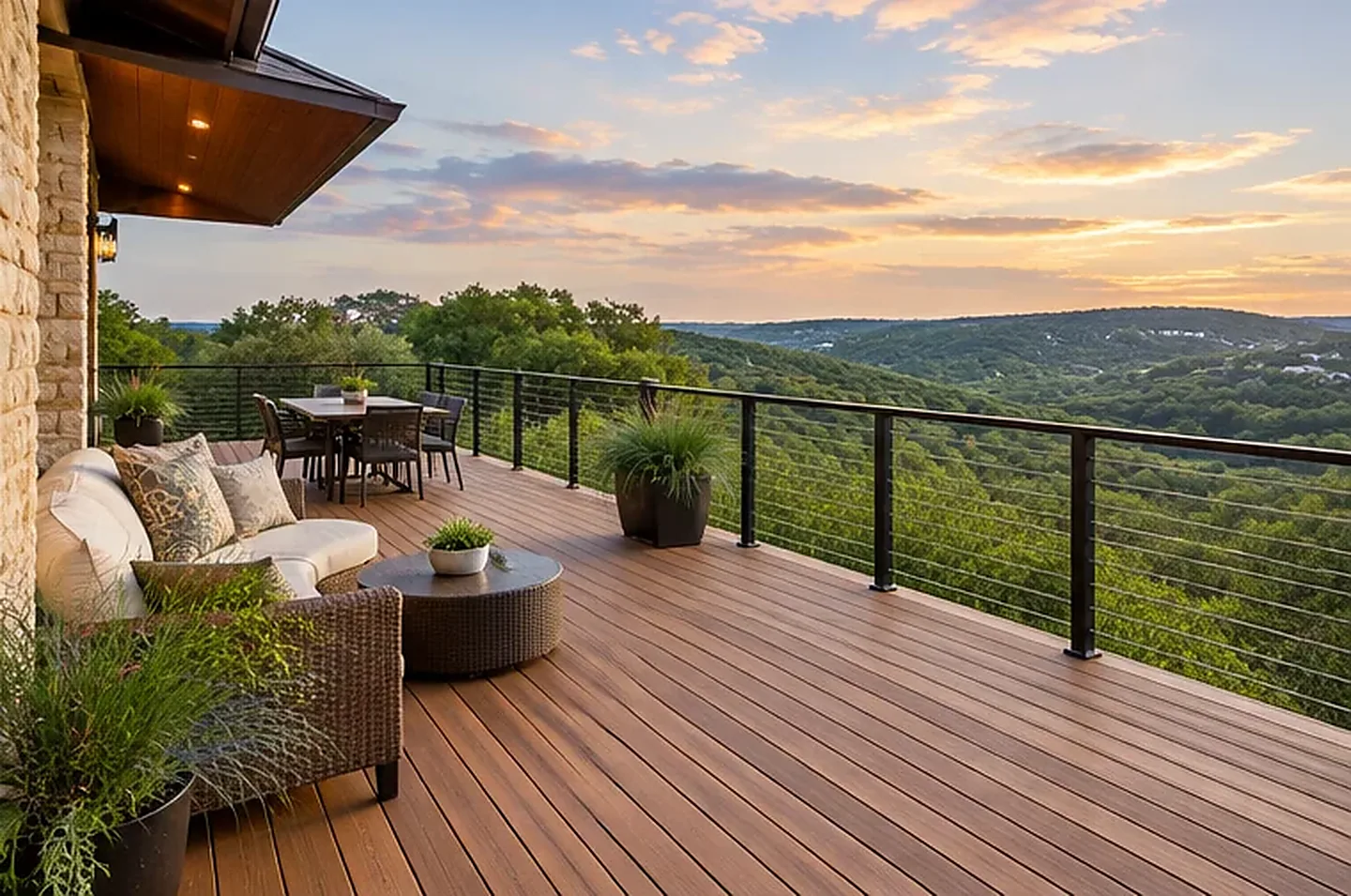
COMPOSITE DECKING DECISIONS
Confirm the actual board line and approved joist spacing or stair-tread support.
Exposed surfaces can become hot; consider color, shade and daily use.
Follow manufacturer guidance for gaps, clips, edge details and ventilation.
PROJECT & MATERIAL OVERVIEW
Composite surfaces provide a consistent manufactured finish with fewer routine recoating needs than many natural-wood surfaces. There are meaningful differences between product lines, colors, thermal movement, fasteners and compatible framing details.
DESIGN CHOICES
Composite is not one uniform material. Manufacturers differ on capping, scratch response, surface texture, warranty terms, profile and spacing. Compare samples in direct sun and shade before buying on color alone.
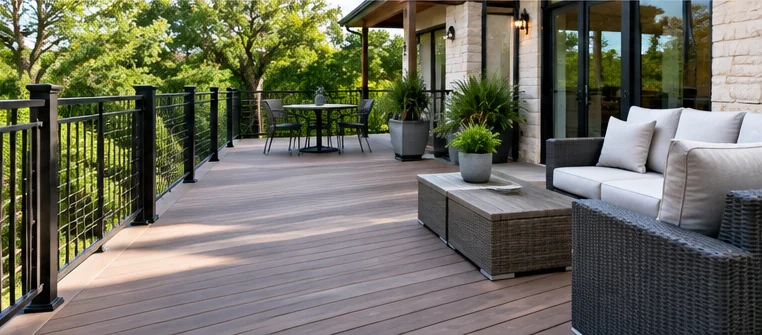
CONSTRUCTION SPECIFICATION
Expansion requirements, edge gaps and the specific fastening system should follow product instructions. The board layout and perimeter trim can influence visible seams and future access for repairs.
LOCAL PROJECT PLANNING
Composite surfaces can become hot in sun; temperature differs by color and product formulation. A shaded dining deck and exposed south-facing deck can feel very different, so evaluate the exact planned conditions.
INSTALLATION DETAILS
Composite boards often require prescribed support spacing. A surface swap onto an older wooden frame should be evaluated for load, spacing, flashing and structural condition before assuming compatibility.
PROJECT SCOPE
Most composite surfaces still need cleaning and may have product-specific restrictions on chemicals, furniture and heat sources. Read written warranty exclusions instead of relying on a generic lifetime claim.
DECISION GUIDE
| Look | Consistent color and manufactured texture |
|---|---|
| Refinishing | Typically no regular staining; cleaning remains |
| Heat | Color and exposure influence surface temperature |
| Quote detail | Manufacturer, line, fasteners, spacing and warranty |
For regulations, specifications and material suitability, consult the applicable jurisdiction and actual product documentation.
CUSTOMER QUESTIONS
Yes. Regular cleaning remains important; follow the exact manufacturer recommendations.
Color change and stain/scratch resistance depend on product formulation and warranty. Review samples and written coverage.
Only if the frame condition and spacing meet the manufacturer and structural requirements.
RELATED SERVICES
DESIGN GALLERY
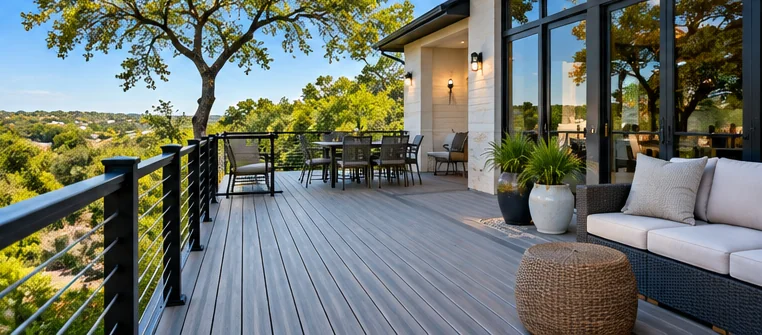
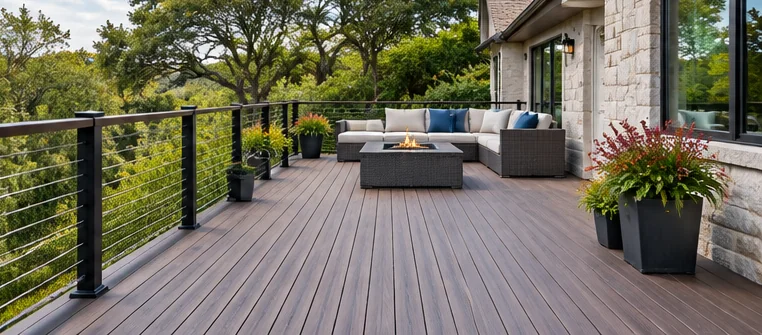
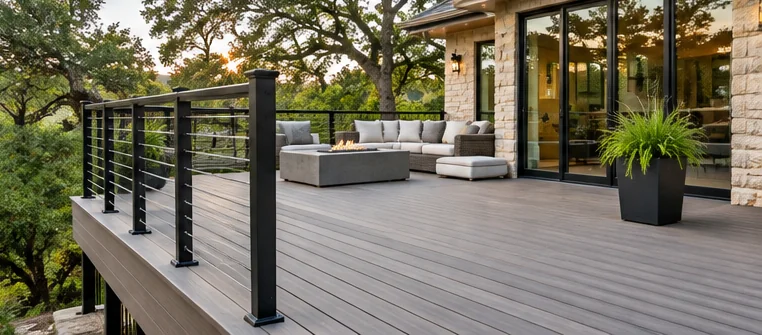
Explore material options, styles and layouts to help plan your fence or deck project.
PROJECT DECISION GUIDE
Composite can reduce some surface maintenance but does not eliminate structural inspection, cleaning or careful detailing.
Specify the manufacturer and actual product line, board profile, finish, fastening system and compatible trim. “Composite” includes noticeably different constructions.
Surface temperature varies with color, exposure and product. Ask for samples to evaluate in full sun, particularly for south- and west-facing locations.
Joist spacing, stair details, ventilation, expansion gaps and butt-joint treatments should follow the selected manufacturer’s instructions.
Compare appearance, traction, cleaning, product warranty terms and replacement availability with natural wood; do not treat “low maintenance” as “maintenance free.”
Tell us the address, project type, approximate dimensions and preferred material. An accurate proposal starts with a clear scope—not a generic online price.