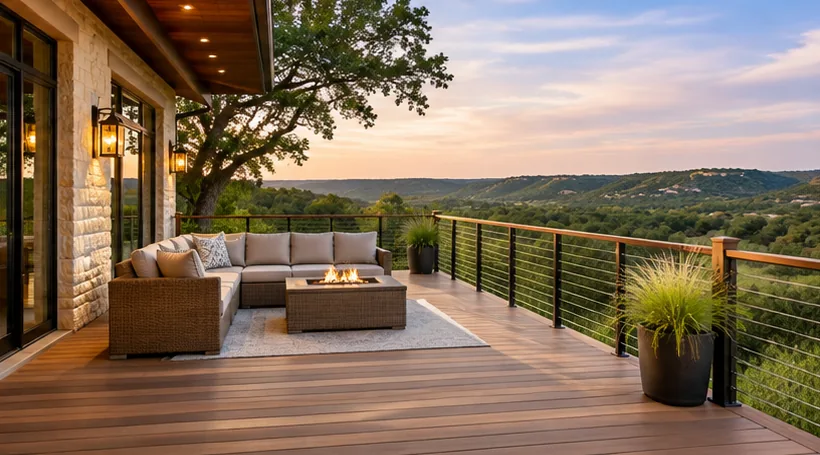
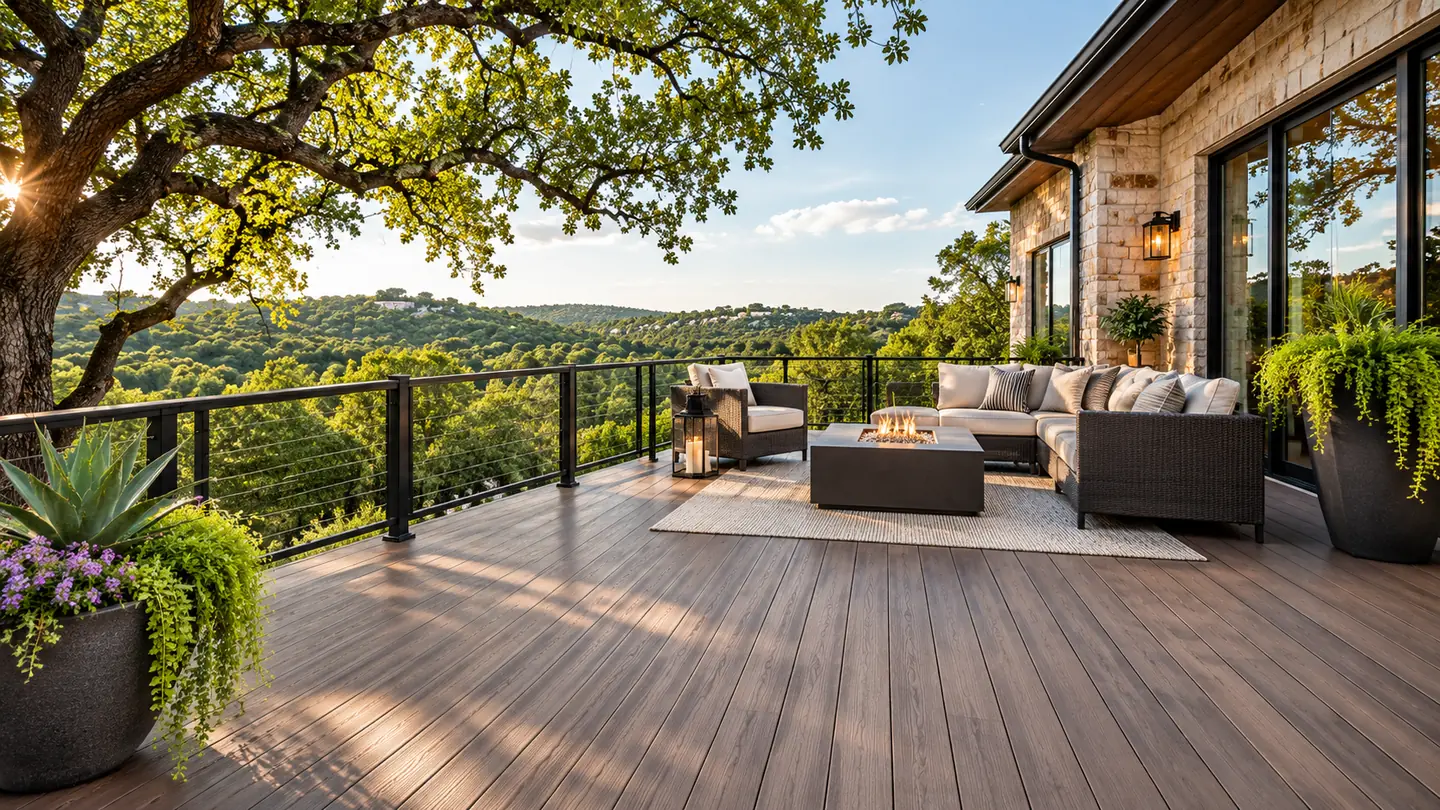
Compare appearance, care, heat, framing, installation details and lifetime ownership costs. This guide focuses on the decisions that affect project quality, maintenance and long-term value.
Start with the actual deck environment
A shaded porch landing and an exposed west-facing deck have very different heat and maintenance conditions. Evaluate sunlight, drainage, pets, furniture, foot traffic and whether the deck will sit near trees or irrigation. Determine whether a deck is near ground level or elevated above grade. This affects ventilation and substructure design irrespective of surface material. Request full-size samples of any product you're considering and view them outdoors at different times of day. A small sample inside a showroom may not reveal surface temperature, glare or dust appearance.
Pressure-treated wood
Pressure-treated boards can be an approachable entry price, but their performance depends on the treatment specification, installation moisture, fasteners, ventilation and maintenance. Wood may cup, check or move as it dries, so spacing and fastening should follow the product guidance. It needs cleaning and typically finishing over time. Some homeowners appreciate the ability to refinish or replace individual boards; others dislike the maintenance. Compare the total expected care commitment rather than assuming all wood decks perform or age identically.
Cedar and other natural decking
Cedar offers natural color and grain, and many homeowners value the feel of real timber. It can weather to gray and may need refinishing to preserve an intended color. It is not immune to dents, splinters or wear. Suitable grade, thickness, fasteners and water management remain important. On a deck with frequent traffic or pets, ask how the proposed board will withstand scratches and whether boards can be sourced later for repairs. If the aesthetic is the deciding factor, be explicit about the upkeep needed to maintain it.
Composite systems
Composite boards are manufactured systems with specific joist spacing, fastening, gapping and ventilation requirements. Some products use capped surfaces with enhanced stain resistance; others differ significantly in appearance and performance. Composite usually avoids routine staining but still needs washing and protection from certain heat or chemical exposures. Dark boards in direct Texas sun can feel hot, so color and exposure deserve attention. Ask about the manufacturer's warranty, suitable fasteners, edge treatments and availability of matching boards. A premium board installed incorrectly can still fail prematurely.
Substructure and fasteners
The framing beneath a deck often deserves more attention than the finish. Compare footings, beams, joists, post connections, corrosion-resistant hardware and the ledger or freestanding arrangement. If a composite surface is expected to last longer than an older frame, discuss whether the substructure should be upgraded. Hidden fasteners can produce a clean appearance but must be compatible with the exact board. Ask the builder to explain lateral bracing, water management and how damaged boards could be removed in the future.
Heat, cleaning and everyday use
Decks are living spaces. Test a sample underfoot in bright sun and consider how children or pets might use the surface. A lighter finish may absorb less heat than a darker one, but no color provides a universal guarantee. Food spills, grease near grills, wet leaves and pollen need cleaning in different ways across materials. Check whether patio furniture pads or grill mats are recommended. For wood, choose cleaning methods that preserve the surface fibers. For composite, follow the product's cleaning instructions and avoid unsupported harsh chemicals.
Budgeting the lifetime cost
Compare installed cost, expected maintenance, likely board replacement, finish and cleaning costs, and the value of your own time. A product with a higher upfront price may be attractive if you strongly dislike regular staining, but the structural frame and installation quality also influence lifecycle performance. Consider availability of replacement boards, especially with special colors or profiles. Ask the estimator to show basic wood, premium wood and composite alternatives with the same frame and layout where possible. That yields a fairer comparison than comparing entirely different deck designs.
How to choose confidently
Narrow the decision to two or three products. Request full sample boards, read technical sheets, compare written warranty exclusions, and ask for installation drawings. Confirm local code, permitting and any HOA design restrictions for the specific property. Ask about surface heat in direct sunlight, cleaning guidance, stair nosings and color transitions. Choose the product that suits your use, budget and care preferences rather than simply the one featured most prominently in an advertisement.
Frequently asked questions
Is composite decking cooler in Texas sun?
Not necessarily. Surface temperature varies by product, color and exposure; compare real samples.
Does composite need maintenance?
Yes. Cleaning, inspection and manufacturer-required care still apply.
Can composite go on an old wood frame?
Sometimes, but the framing must meet structural and product-specific requirements.