A practical material comparison for privacy, maintenance, appearance, access and long-term value in Central Texas. This guide focuses on the decisions that affect project quality, maintenance and long-term value.
Start with the job the fence must do
Before choosing a material, define what success means. A fence designed to screen a patio from adjacent windows has different priorities than a pool barrier, an equipment enclosure or a decorative front boundary. Rank privacy, visibility, durability, pet safety, appearance, maintenance and total ownership cost. A material that is excellent at one job may be unsuitable for another. Write down gate widths, desired height, whether the boundary is shared and any recorded subdivision standards before comparing quotes. This prevents a polished product photo from driving the choice before the practical requirements are known.
Wood: flexibility and natural character
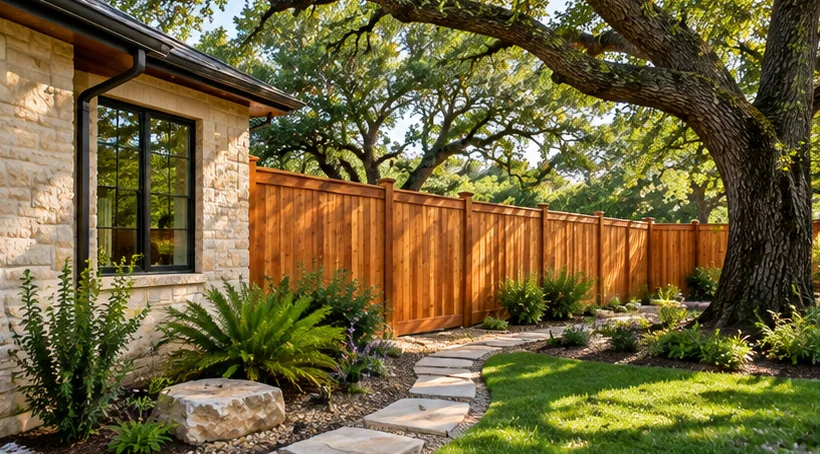
Cedar and other wood options can be built in conventional privacy panels, board-on-board patterns, horizontal lines and custom gate configurations. Wood is repairable in sections and visually adaptable, although boards can move, fade and require refinishing. The best wood system depends on supports and details as much as fence-board appearance. A homeowner who values natural texture and is comfortable with periodic care may prefer wood; someone who wants a more consistent manufactured finish may not. Ask exactly which species, board grade, post system and hardware the estimate includes.
Vinyl: privacy with different maintenance
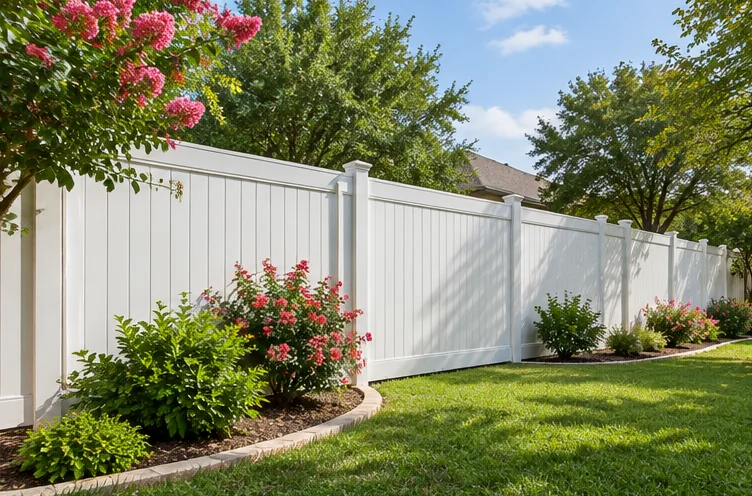
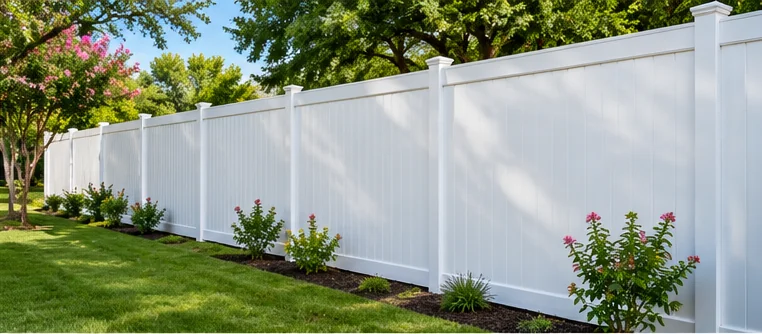
Vinyl or PVC panels often suit homeowners prioritizing a clean privacy wall without staining. The surface still needs washing, and excessive heat, impact, poor product quality or weak connections can be problems. Panel systems vary widely in wall thickness, reinforcing, post construction and flexibility. Confirm product color, replacement-part availability, gate design and the manufacturer's installation requirements. For sloping sites, ask whether the system racks or steps and what that means for the gap under the panel. In communities with strict design standards, obtain approval for the exact profile and color.
| Material | Privacy | Finish care | Common use |
|---|---|---|---|
| Cedar / wood | High in solid designs | Periodic finish care | Backyard privacy |
| Vinyl | High in solid designs | Cleaning | Privacy and decorative panels |
| Aluminum | Low without screening | Cleaning / hardware | Ornamental boundaries |
| Chain link | Low without screening | Inspection / coating | Practical perimeters |
Aluminum: open views and ornamental boundaries
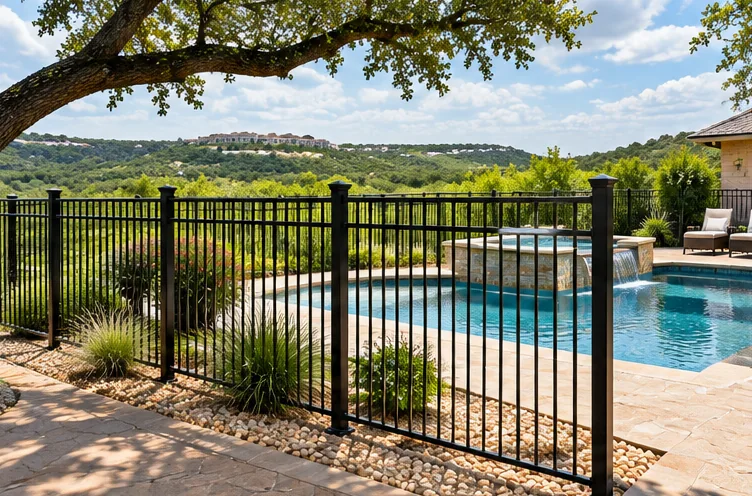
Aluminum fencing can define spaces without closing the sightline to a garden or landscape. Powder-coated ornamental panels are often chosen around front yards and pools, but a pool barrier has specific gate, latch, opening and height requirements; a generic ornamental panel is not automatically compliant. Different picket profiles and panel widths affect appearance and function. Compare coating warranty terms, fasteners, brackets and how the panels transition at changes in grade. A decorative aluminum fence provides little visual privacy unless combined with landscaping or another screening element.
Chain link: practical enclosure and security
Galvanized and vinyl-coated chain link can be efficient for dog runs, play areas, storage yards and business perimeters. The specification should identify fabric height and gauge, post size, framework, tension wire, terminal bracing and gates. Privacy slats change wind loading and appearance, so the support system may need to be evaluated. For commercial properties, consider gate access, vehicle turning space, visibility for security monitoring and whether additional security features are legally permitted. A short description like “six-foot chain link” is not enough information to evaluate a quote.
Which material handles Austin conditions?
There is no universal winner because ground conditions and site exposure vary across the region. Wood needs a sensible care plan; vinyl needs appropriate product selection and installation; aluminum needs sound posts and compatible hardware; and chain link needs the correct framework for use and wind exposure. Sunlight, runoff, grade, trees and likely impact from lawn equipment can all influence durability. A well-designed installation with appropriate foundations is more valuable than choosing a supposedly maintenance-free material based on a single sales claim. Compare total care over the years you expect to own the property.
Use a lifecycle rather than sticker-price comparison
Initial purchase price is only one component. Include cleaning, staining or coating, replacement parts, gate adjustments, damage repair and the potential cost of replacing a system before you sell the property. Some repair parts may be proprietary, so ask whether local suppliers stock them. For wood, replacing a handful of boards may be simple; for a discontinued manufactured profile, a matching panel may be harder to find. Obtain materials and labor separated in the estimate where possible, and check which components fall under a product warranty versus a workmanship warranty.
Questions that reveal specification quality
Ask each installer which posts, spacing, fasteners, gate hinges, latches and concrete or footing details are planned. How will they protect utility markings and handle roots? Are permits and HOA approvals included? Who removes old fencing? Does the proposal identify the exact brand or grade and include a drawing of gate locations? Will the installer provide an owner walkthrough and written warranty terms? These questions improve decision quality more than comparing two per-foot figures with hidden assumptions.
Frequently asked questions
What is the lowest-maintenance fence?
Vinyl and aluminum generally avoid the refinishing associated with wood, but both still need cleaning and occasional hardware attention.
Which fence provides the most privacy?
Solid wood and privacy vinyl designs provide more screening than typical ornamental aluminum or chain link.
Can chain link be used commercially?
Yes. It is often useful for practical perimeters, subject to security, zoning and site requirements.