
Privacy level
Side-by-side boards allow more sightlines as wood moves; board-on-board overlaps boards for stronger visual screening.
Privacy, character and design flexibility. Wood fencing can be built in traditional vertical picket, board-on-board, cap-and-trim and horizontal styles. Compare wood grades, post systems, fasteners and finishing schedules.
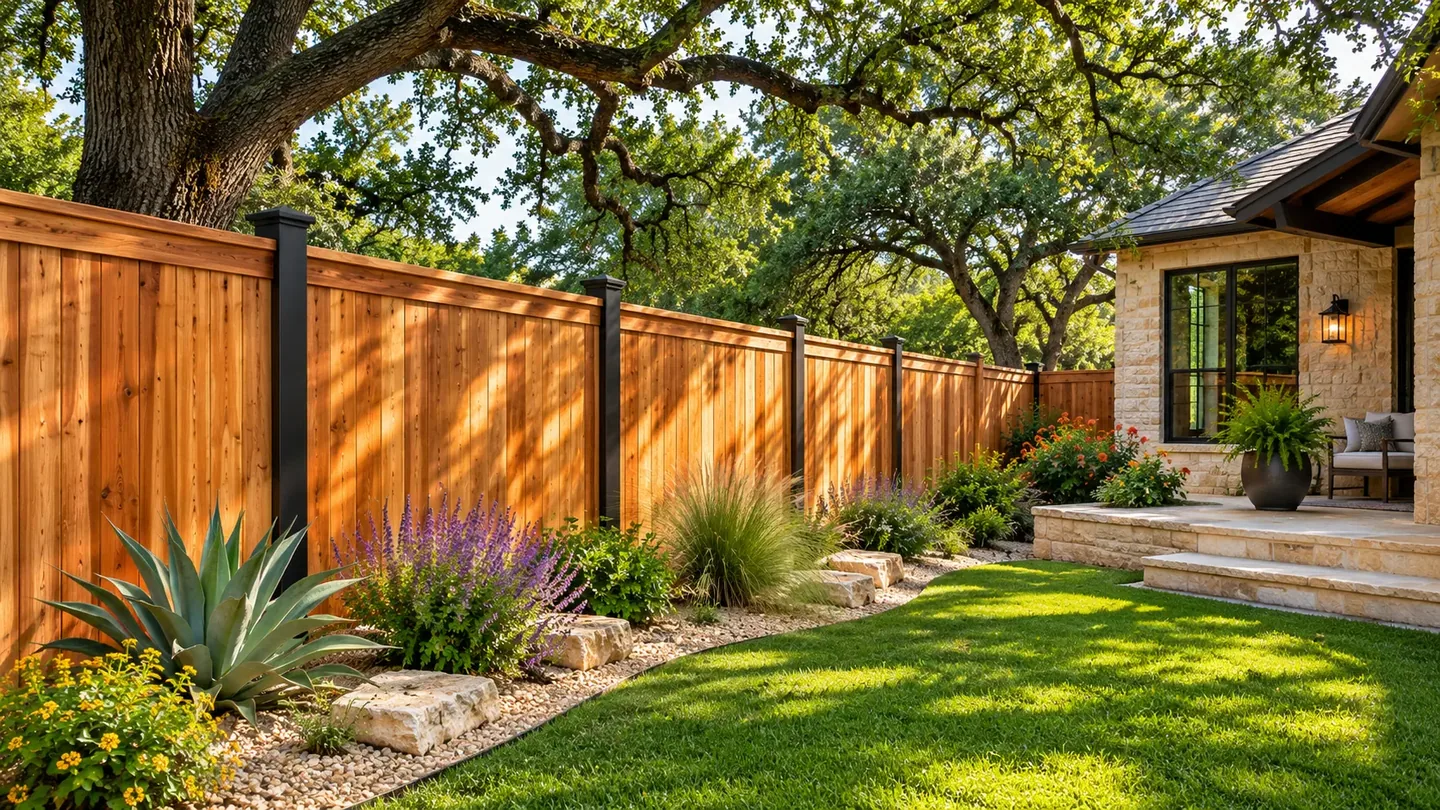
WOOD FENCING DECISIONS
Side-by-side boards allow more sightlines as wood moves; board-on-board overlaps boards for stronger visual screening.
A proposal should identify species or grade, posts, rails, fasteners, post spacing and treatment/finish assumptions.
Wood requires cleaning and periodic finish decisions; sun exposure, soil contact and irrigation influence upkeep.
PROJECT & MATERIAL OVERVIEW
A wood privacy fence should be specified as a complete assembly: boards, rails, posts, fasteners and finish. The appearance matters, but the post foundations, grade changes and moisture exposure often determine how well the fence performs over time.
DESIGN CHOICES
A standard vertical-picket fence can be an economical privacy layout when boards are installed closely. Board-on-board overlaps pickets to reduce sight gaps as wood expands and shrinks. Horizontal fences deliver a different architectural look but need careful rail support and a consistent treatment of grade changes. Cap-and-trim changes the finished appearance without replacing the structural basics.
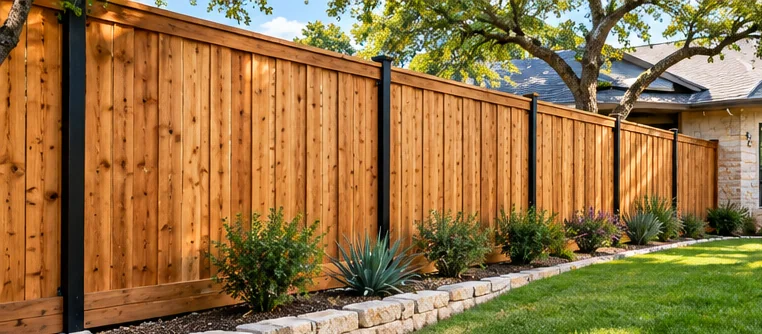
CONSTRUCTION SPECIFICATION
Western red cedar and pressure-treated pine have different appearance, durability and upkeep profiles; neither should be sold as maintenance-free. Ask for the actual species and grade, board dimensions, whether the boards are kiln-dried, how cuts will be treated, and whether staining is included. The natural color of a new fence will change with weather exposure.
LOCAL PROJECT PLANNING
The specification should name the post material and size, rail configuration, fasteners, concrete/footing method and how the design addresses sloping ground. Steel posts may reduce some types of wood-post deterioration, but their fit and finish still need design consideration. Post depth and spacing cannot be responsibly prescribed without site and engineering conditions.
INSTALLATION DETAILS
Measure the proposed line against a survey; flag utilities and easements; review neighborhood restrictions; document tree roots, grades and access. Obtain a written proposal that states footage, height, style, board and post specification, removal scope if any, cleanup and who handles approvals. The proposal should not imply that a mailing-city name determines which code applies.
DECISION GUIDE
| Privacy | Strong with closely fitted or overlapping boards |
|---|---|
| Maintenance | Cleaning and periodic finishing usually required |
| Appearance | Natural grain, vertical and horizontal configurations |
| Important quote detail | Actual species, post system, fastening and finish |
For regulations, specifications and material suitability, consult the applicable jurisdiction and actual product documentation.
CUSTOMER QUESTIONS
Overlapping pickets can reduce visible gaps caused by wood movement. The result depends on installation details and board condition.
They are worth comparing when long-term post performance matters. Ask how the post system is anchored and concealed, and whether it fits the design.
Unfinished wood can weather unevenly; staining and cleaning are common upkeep choices. Timing depends on finish products, exposure and manufacturer instructions.
RELATED SERVICES
DESIGN GALLERY
Explore material options, styles and layouts to help plan your fence or deck project.
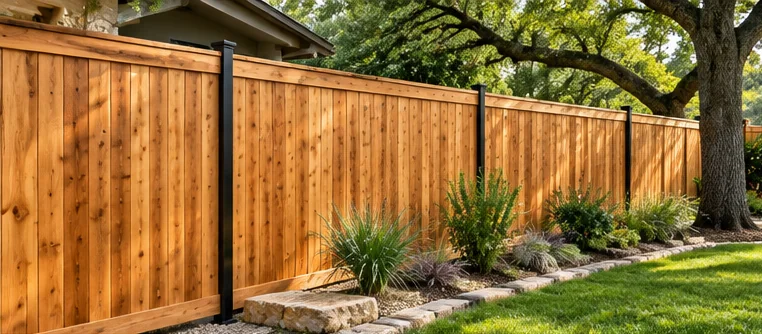
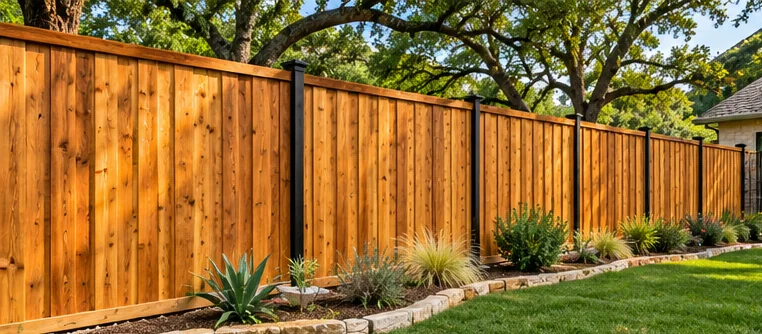
PROJECT DECISION GUIDE
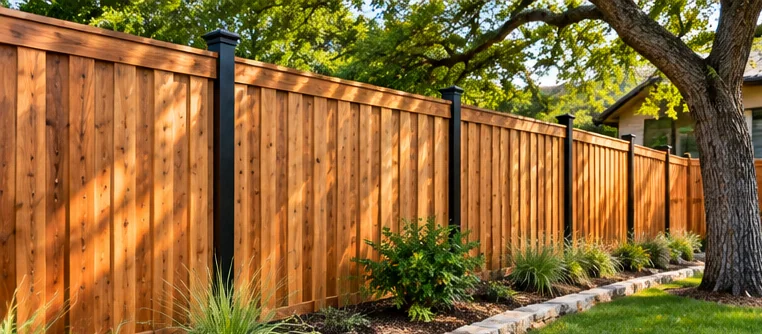
A cedar fence is not one specification. Board pattern, structural members, fasteners and finish all change privacy, appearance and maintenance.
A side-by-side board fence has different sightline gaps than board-on-board. Horizontal layouts can look modern but need rail and span details that control bowing. Specify which side of the yard matters most rather than paying for a treatment that cannot be seen.
Ask which species and grade are being priced, whether boards will be installed at a stated moisture condition, and if posts and rails are wood or metal. Natural weathering, stain and transparent finishes produce different care cycles. An estimate should not treat all cedar as interchangeable.
A fence can fail at posts, rails, fasteners or gates rather than at the pickets. Discuss embedment, post treatment or steel alternatives, corrosion-resistant fasteners and how soil conditions affect the foundation plan.
Request total linear footage, nominal height, board style, gate count/width, post and rail specification, demolition, debris removal and optional finish work as distinct line items.
Tell us the address, project type, approximate dimensions and preferred material. An accurate proposal starts with a clear scope—not a generic online price.